Where Rollouts Falter—and How to Spot the Gaps Early
Picture a Nairobi office park at 7 a.m., drivers queuing for a charge, security trying to manage flow, and the operations team refreshing dashboards that won’t load. Your EV charger solution is physically live, yet the experience already feels fragile. When you call an EV charging solutions company, you expect uptime, predictable costs, and smooth user journeys. Data from fleet and retail sites shows a sobering trend: 20–35% of stations see avoidable downtime in month one due to network handshakes and power scheduling. It happens for small fixes—firmware mismatches, weak backhaul, sloppy peak tariffs—haraka haraka haina baraka. So ask yourself: are we planning for cables and concrete, or for the whole service loop (from grid constraints to mobile UX)? The difference is the difference. We’ll map the fracture points across site design, OCPP back-end choices, and power converters—and compare what “good” looks like versus “quick.” Next, we go deeper into what really breaks after go-live, and why that keeps repeating across regions.
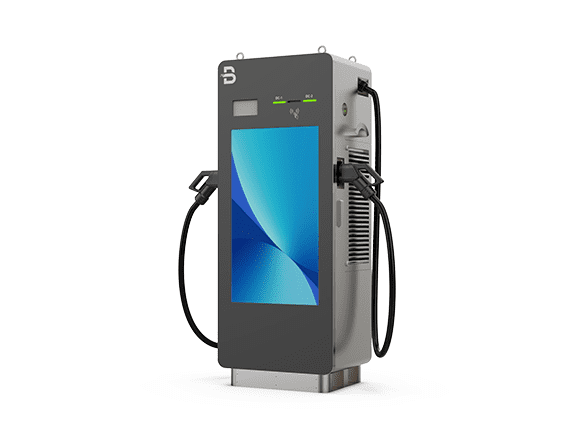
Deeper Than the Plug: The Hidden Flaws in Traditional Setups
Why do installs stall after go-live?
Most legacy playbooks optimize for installation speed, not operational stability. Technically speaking, the trouble stems from brittle integrations: the charger firmware, the OCPP platform, the payment gateway, and the utility-facing demand response. A small mismatch—cipher suites, idle timeout, or meter mapping—can cascade into session drops. Edge computing nodes get underutilized, so every decision rides the cloud; when the backhaul wobbles, the queue grows. Load balancing often runs on simplistic rules, ignoring feeder limits or transformer heat. Then maintenance arrives late because logs aren’t normalized. Look, it’s simpler than you think: align the data model first, then the devices. Reverse that and you buy pain—funny how that works, right?
There’s also a human layer. Drivers want fast starts; site owners want low bills; utilities want stable feeders. Traditional plans miss this triangle. AC Level 2 units are over-deployed where DC fast charging is needed; power converters are sized for nameplate, not duty cycles; firmware over-the-air (FOTA) is treated as an afterthought. Support teams chase tickets without root-cause maps, so the same handshake bug hits every new site. If Part 1 showed the morning chaos, this part names it: fragile orchestration, not faulty plugs. A stable stack treats grid constraints, charger logic, and app UX as one system, with resilience at each layer.
Ahead of the Curve: Principles That Make Charging Truly Scalable
What’s Next
Comparing strong and weak rollouts, a pattern emerges: resilient networks shift control closer to the edge and standardize telemetry before scaling. New technology principles lead the way. First, policy-driven load control that runs locally—so queues don’t depend on the cloud during a network blip. Second, event-rich OCPP plus health metrics (heartbeat latency, contactor cycles, kWh variance) that feed a single observability layer. Third, adaptive power management tied to tariffs and feeder ratings, not just charger count. When you frame evaluation against these principles, you start to see why modern EV smart charge solutions look different: less heroic on-call work, more predictable uptime. And yes, a bit more thinking up front—pole pole saves money later.

What should you measure when choosing a platform and partner? Keep it practical and comparable. One, session reliability under degraded networks: test a 3% packet loss and verify start/stop success, error codes, and recovery time. Two, lifecycle maintainability: FOTA cadence, rollback safety, and mean time to diagnose using unified logs (charger, gateway, payments). Three, grid harmony: peak clipping efficacy, transformer temperature margins, and demand response latency. If a vendor can demonstrate these with real data, you are buying fewer headaches. The bottom line from the earlier sections stands: design for operations, not just ribbon-cutting. Compare by principles, pilot with failure modes on purpose, and scale only what proves resilient. For teams that value steady progress over show, that mindset delivers—quietly and consistently. EVB