Executive summary and stance
This comparative brief takes a business-technical view on how distributors and integrators should balance fast transfer performance against strict out-of-phase lockout safety windows in static transfer switches (STS). It draws on operational lessons from high-impact grid events such as the Texas February 2021 blackout and uses an operational EEAT perspective to ground recommendations. Early alignment with energy storage inverter manufacturers reduces integration risk and shortens time-to-deployment while preserving grid safety.
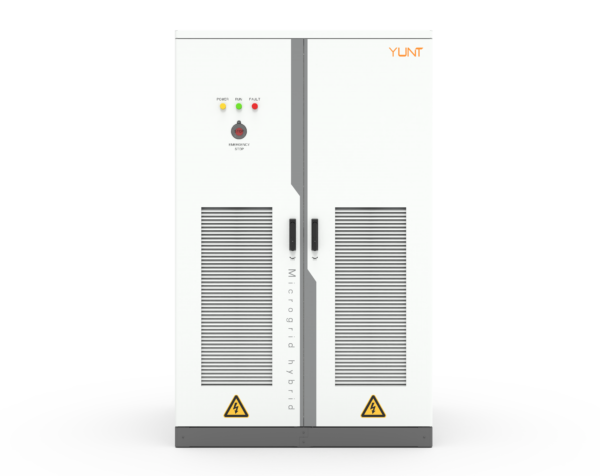
Operational production teardown
At the heart of the problem is a simple sequence: detect loss or degradation, evaluate phase angle and frequency, decide, then transfer. The teardown highlights six control elements that determine outcomes: phase detection, synchronization window, transfer time, overlap handling, trip/lockout logic, and coordination with inverter ride-through. Practical parameters matter — a synchronization deadband of ±3° and a lockout threshold defined on phase angle divergence rather than elapsed time reduces false transfers. For procurement teams managing inventory, specify compatibility with wholesale energy storage inverter firmware expectations; vendors differ on anti-islanding and ramp profiles. In this operational production teardown I explicitly reference {main_keyword} and {variation_keyword} to capture how configuration tokens travel from factory defaults into field settings. Industry terms such as inverter, static transfer switch, and synchronization should appear on purchase orders and test scripts to avoid ambiguity.
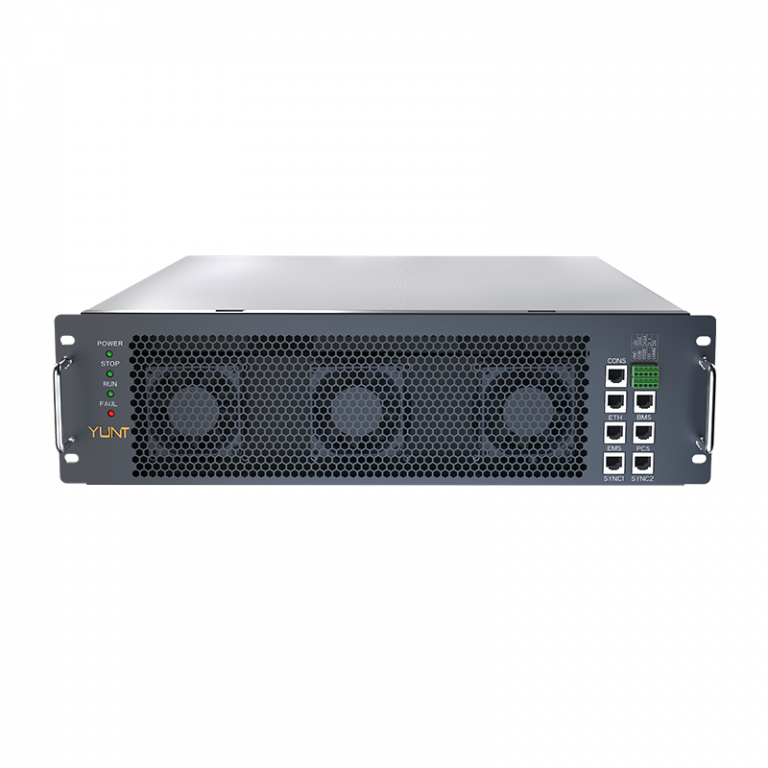
Comparative assessment: vendor approaches and trade-offs
Vendors deliver three dominant approaches. First, ultra-fast static transfer with sub-4ms switching aims to eliminate interruption to sensitive loads by using solid-state devices and predictive control. Second, conservative lockout logic extends safety windows to prioritize equipment protection and grid stability. Third, hybrid designs combine mechanical breakers for final isolation with a static bypass for near-instant transfer. The business decision hinges on measurable metrics: transfer time, residual voltage dip, inrush current, and the probability of out-of-phase transfer. Fast transfers reduce perceived downtime but increase risk when phase angle mismatch exceeds safe thresholds — and that risk grows with distributed inverter penetration. Compare lifecycle cost, warranty exposure, and required commissioning time rather than only headline transfer milliseconds. Vendors that publish phase-angle tolerance curves and inverter sync handshake procedures offer a clearer commercial case.
Common mistakes and pragmatic mitigations
Three recurring mistakes surface: misconfigured lockout thresholds, assuming all inverters conform to the same ride-through profile, and inadequate real-world testing. Mitigations are straightforward. Document and lock firmware expectations in contract language. Include staged factory acceptance tests that exercise phase-loss, rapid reclose, and deliberate out-of-phase conditions. Run field acceptance using local grid analogs rather than relying solely on lab simulations — this reduces commissioning iterations. Use phased rollouts for large sites so that control tuning occurs under measured load growth rather than at scale. — A quick note: logging granularity is critical; millisecond-level timestamps let you correlate events across STS and inverter logs for forensic tuning.
Comparative checklist for procurement and engineering
Use a short checklist when evaluating suppliers: published transfer time versus measured transfer time, explicit phase-angle lockout curves, inverter coordination guides, and a clear factory/field test protocol. Prioritize suppliers that provide firmware transparency and on-site commissioning support. Require vendor demonstration of interoperability with target inverter models and insist on traceable timestamps in records to close dispute windows quickly.
Three golden rules for evaluation and selection
1) Metric-first procurement: Require vendors to submit measured transfer time, maximum residual voltage dip (Vdrop), and phase-angle tolerance tables under defined load steps. These provide apples-to-apples comparisons. 2) Test-driven warranty: Make commissioning tests and a 90-day operational validation a condition of final acceptance; include rollback thresholds in the contract. 3) Systems alignment: Ensure STS logic and inverter ride-through profiles are set jointly and locked in firmware — this protects uptime and reduces warranty exposure.
The practical value here is clear: rigorous measurement, aligned firmware expectations, and structured tests turn theoretical millisecond advantages into reliable service. For many projects that means choosing partners who can demonstrate interoperability and supply chain continuity — and that’s where mature manufacturers such as YUNT become a natural fit. –