Setting the Stage
Picture this. The room is full, cameras are on, and the client is waiting in another city. The hybrid meeting room solutions are supposed to make it smooth. Yet someone can’t unmute, someone else can’t see slides, and the first five minutes slip away. Surveys suggest a third of meetings lose time to setup and fix-it moments—on repeat. If people feel unseen or unheard, trust drops. And then the decision stalls. Is that really the bar we accept for teamwork in a global economy?

Here’s the claim: the tech is not broken; the chain is. Devices, networks, and habits collide in odd ways (little frictions become big). Most rooms were built for in-person flow, not blended presence. So we must argue for a better standard, one that treats remote and in-room users as equals. That is practical. That is fair. And yes, that is political in the best sense—about power, access, voice. Ready to see what truly changes outcomes? Let’s move from surface fixes to the deeper levers—then compare what actually works next.
The Hidden Breaks You Don’t See (Until You Do)
Why do defaults fail?
Start with the core: hybrid discussion technology is not just a microphone on a table. It is a system that manages intent, turn-taking, and clarity across spaces. Traditional setups assume people face one speaker and one screen. But real meetings jump—side comments, fast pivots, shared docs. When the room cannot track voices or route them cleanly, remote users get a blur. Beamforming mics help, but without a tuned DSP and sane QoS policies, artifacts creep in. Look, it’s simpler than you think: if the signal path is uneven, people stop talking. Participation drops. Decisions drift.
Now trace the chain. Camera auto-framing works—until two people speak at once, and the codec hunts. Network is fine—until the Wi‑Fi adds jitter and blows the latency budget. Even power converters and cabling matter; a hum can mask soft voices. Edge computing nodes can smooth noise and normalize volume, but only if the room plan matches the workflow. The hidden pain point is not “bad gear.” It is mismatch. Rooms are tuned for a script no one follows—funny how that works, right? Align the script to the people, the content, and the pace, and reliability goes up before you even buy new hardware.
Looking Ahead: Principles, Not Promises
What’s Next
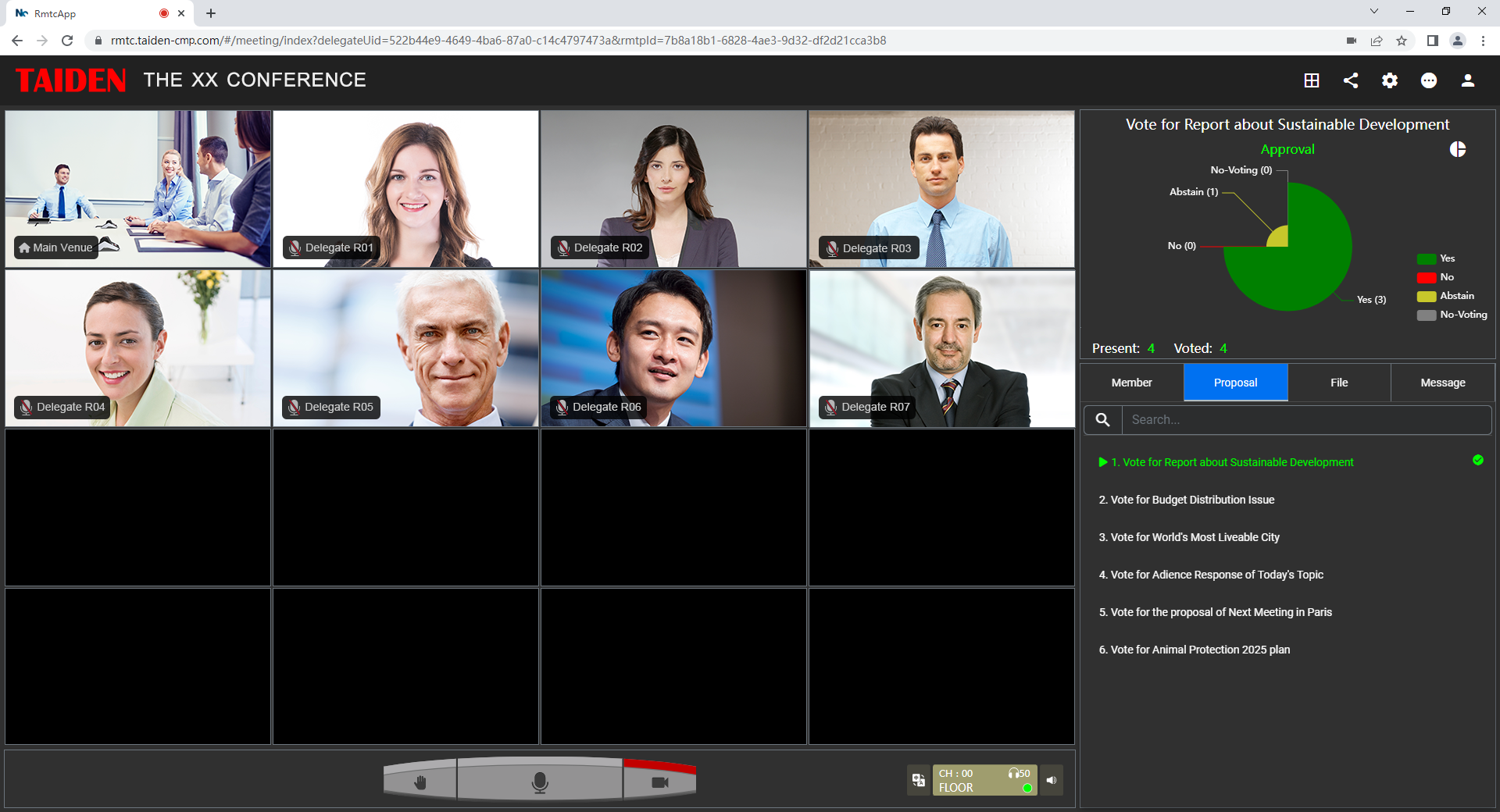
Comparisons matter now. Old rooms optimize for a podium. Modern rooms optimize for flow. The principle is simple: move processing closer to the voice and route context to where it’s needed. A resilient hybrid conference system applies three layers in concert—capture, decide, deliver. Capture with spatial audio and clear mic zoning. Decide with policy: who gets priority, when to auto-mix, how to respect floor requests without silencing dissent. Deliver with stable bandwidth, reserved paths, and codecs that protect key frequencies used in speech. Semi-formal tone aside, this is the real pivot. You design for turn-taking as a first-class event, not as an afterthought.
Here’s the forward-looking angle. As AI scene analysis improves, systems will predict handovers, not just react. That means fewer talk-over collisions and quicker floor grants. Edge logic can preempt echoes, and SD‑WAN can keep packet loss from derailing nuance. Compare that to legacy rooms that treat audio like a tin can on a string. Different worlds. Summing up, we saw how the chain breaks in small ways, how mismatches create silence, and why principles beat gadgets. To choose well, use three metrics: 1) Conversational equity—can every voice get in within two seconds, no matter the seat or distance? 2) Stability under load—does quality hold when the room is full and the agenda is fast? 3) Recovery speed—after a failure, can the system self-correct in under one turn of talk? Meet those, and the rest follows—policy, trust, results. For a deeper look at integrated approaches in this space, see TAIDEN.
